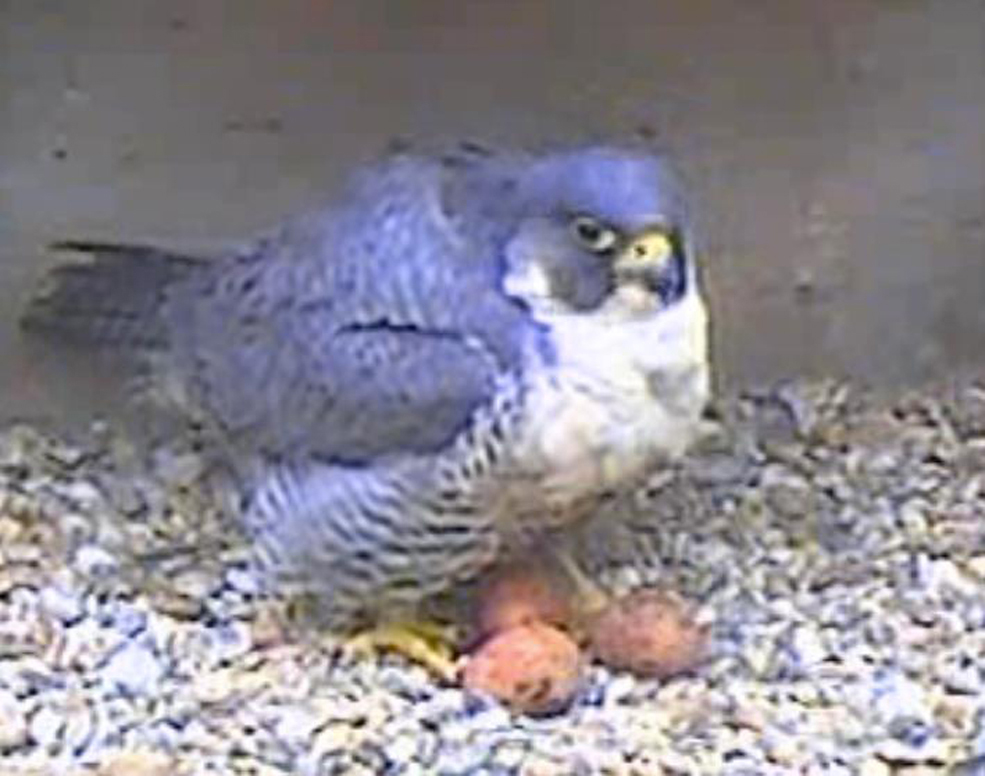
Here are a few shots from the other day…
-
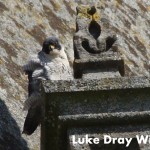
- Dad
-
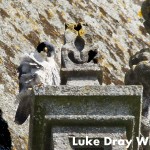
- Dad
-
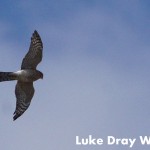
- Look our for Sparrowhawk
-
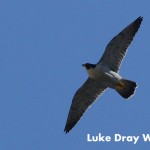
- Dad Flying
Here are a few shots from the other day…
It is strongly believed that this year’s male is different from previous years. The reason for believing this is that this year’s male has very different behaviour from the previous male. Examples of this are:
All these add up to us being 99% sure it is a different male; the only thing that does not make it 100% is the fact that neither males are ringed.
(Luke Dray, David Shaw and Janet Shaw)
Video of 4th egg being laid tonight (at 7:21pm), event at about 2:45 into the video…
Just now (7.20pm) the 4th egg was laid…
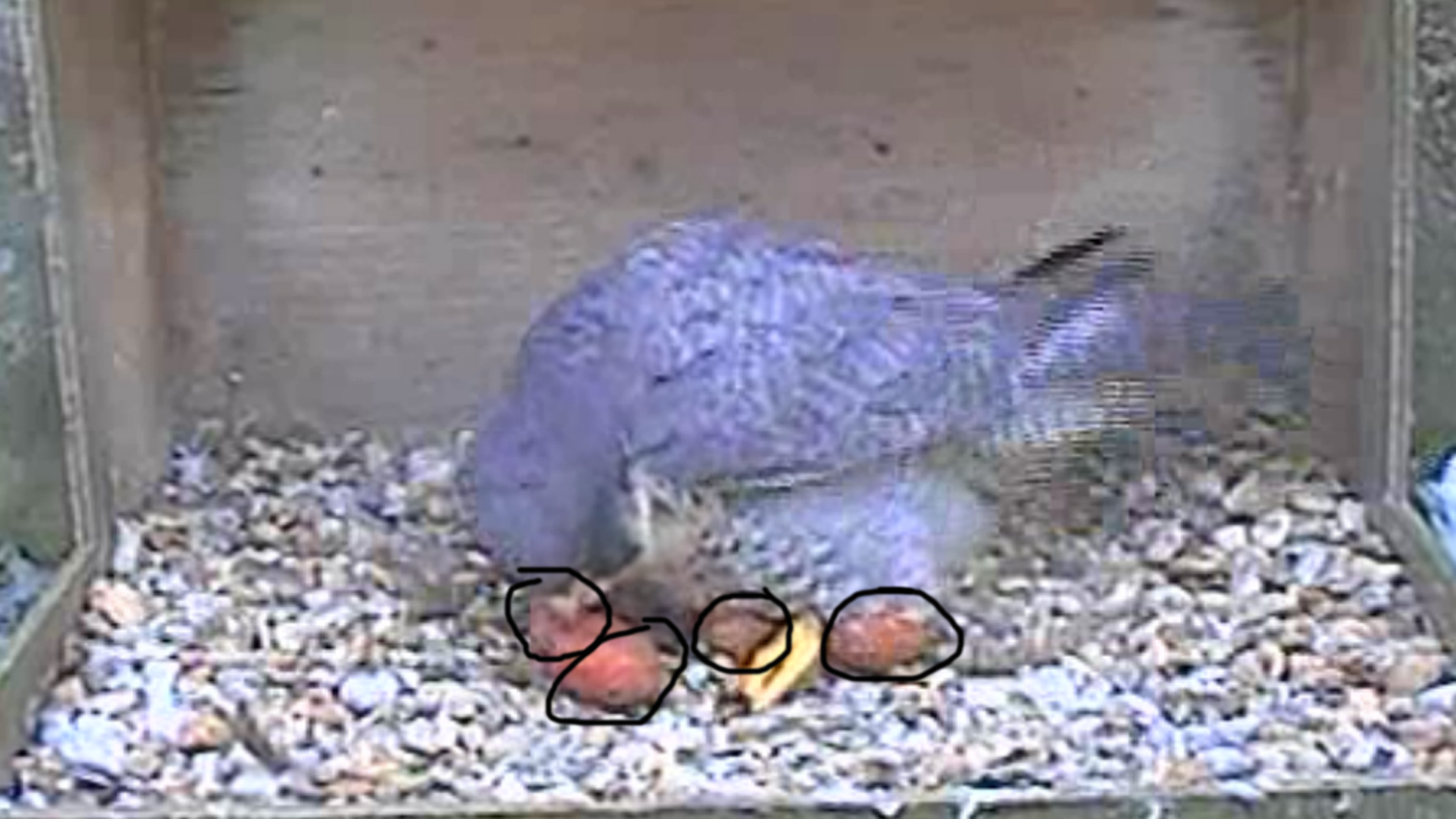
The Four Eggs
Apologies we seem to be having some problems with the webcam – we are trying to get it fixed ASAP
This is the forth day of facts. Today I will teach you about how peregrines fly so quickly.
The Peregrine Falcon reaches faster speeds than any other animal in the stoop, which means soaring to a great height and then diving suddenly at speeds of over 200 mph, hitting a wing of its prey so it does not harm itself when it catches the prey
. The air pressure from a 200 mph dive could harm a bird’s lungs, but tubercles in the peregrines nose guide the powerful airflow away from the nostrils,
allowing the bird to breathe more easily. To protect their eyes, the falcons use a membrane (third eyelid) to clear debris from their eyes while maintaining vision. In 2005, Ken Franklin recorded a peregrine stooping at 242 mph! Here is a short video of that event and how peregrines go so quickly…
We are well on our way for a whole clutch, as during the night (or possibly this morning), the third egg was laid – here is the screenshot I managed.
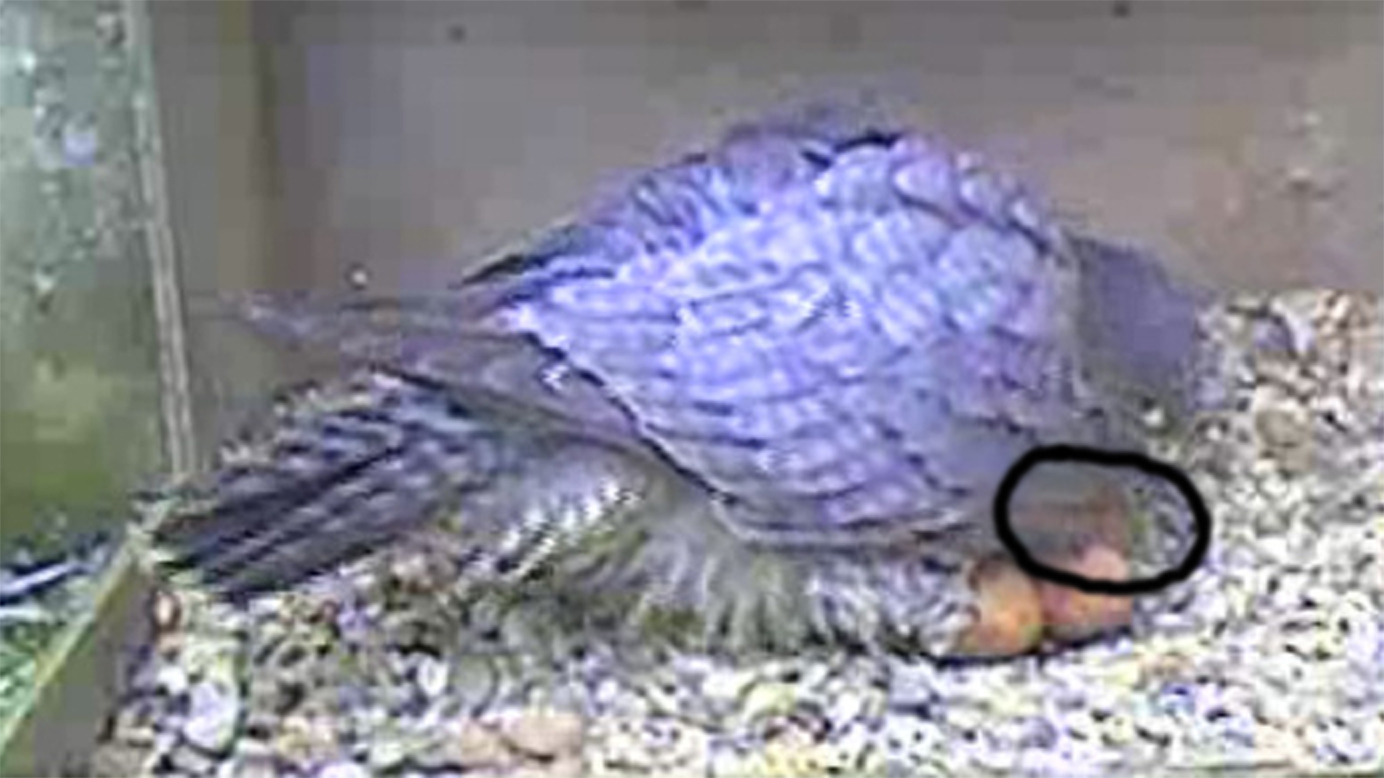
The Third Egg Is Circled
The Peregrine is famous for its speed, reaching over 200 mph during its typical hunting stoop, making it the fastest animal in the world. According to a National Geographic program, the highest measured speed of a Peregrine Falcon was 242 mph (that is nearly as fast as the fastest road legal car!)

Female Peregrine Going Into a Stoop
You can now view the webcam directly from the blog. All you need to do is bookmark this post or click on the webcam page link on the right hand side.